
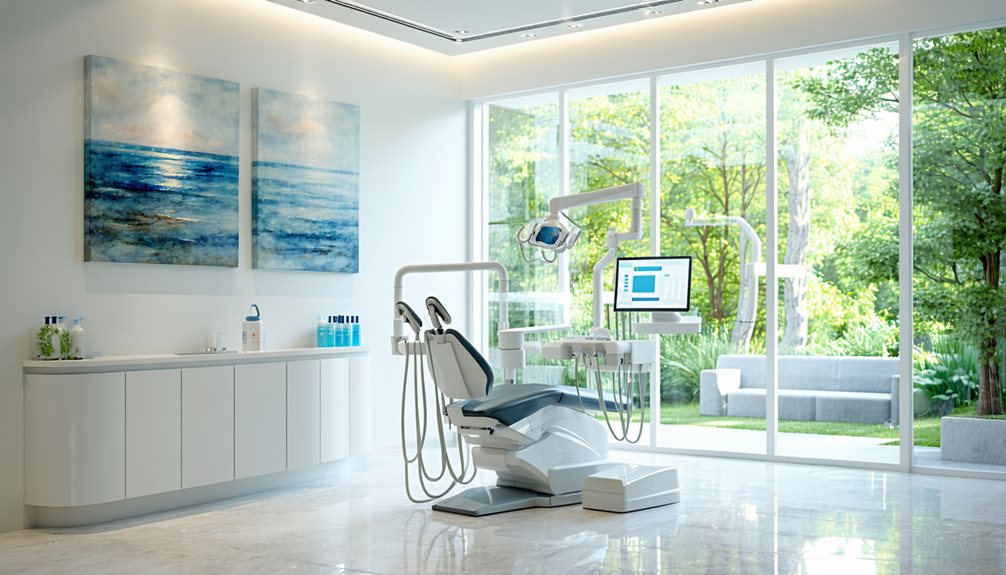
Top dental implant clinics achieve high success rates through expert care, utilizing advanced technology and personalized treatment plans. Renowned specialists and highly skilled surgical teams are pivotal, with extensive training ensuring precision and tailored consultations. Integration of 3D cone beam CT imaging and robotic-assisted procedures enhances diagnostic accuracy and surgical precision. Thorough aftercare services, including regular follow-ups and 24/7 support, contribute greatly to patient satisfaction and implant longevity. Clinics boast success rates exceeding 95%, with digital diagnostics and CAD technologies optimizing both functionality and aesthetics. Gain insights into the innovative practices these clinics employ to maintain exceptional outcomes.
Renowned Implant Specialists
Renowned implant specialists, known for their expertise and precision, are at the forefront of advancing dental implantology through innovative techniques and a commitment to excellence.
These professionals play a pivotal role in shaping the future of oral rehabilitation, providing patients with state-of-the-art treatment options that guarantee ideal outcomes. Their extensive training and continued education allow them to offer expert consultations that are tailored to each patient’s unique needs.
This personalized approach not only enhances the quality of care but also assures high success rates in dental implant procedures.
In the domain of dental implantology, expert consultations serve as a critical component in identifying the most suitable treatment options for patients. Specialists meticulously assess each case, considering factors such as bone density, oral health status, and aesthetic goals.
By leveraging their sophisticated understanding of dental anatomy and implant technology, they can devise thorough treatment plans that address both functional and cosmetic concerns.
This strategic planning is instrumental in achieving seamless integration of implants, thereby restoring both the form and function of natural teeth.
Renowned implant specialists remain committed to pushing the boundaries of dental science, consistently delivering innovative solutions that set new standards of care.
Cutting-Edge Technology
Dental implant clinics are at the forefront of innovation, integrating cutting-edge technology to enhance patient outcomes.
Advanced imaging techniques, such as 3D cone beam computed tomography, enable precise planning and placement of implants by providing detailed visualization of oral structures.
Additionally, robotic-assisted procedures facilitate greater accuracy and efficiency, minimizing human error and optimizing surgical precision.
Advanced Imaging Techniques
Frequently, advancements in imaging technology considerably impact the field of dental implants, offering improved diagnostic capabilities and treatment outcomes. At the forefront of these advancements are digital diagnostics and 3D modeling, which have revolutionized the precision of implant procedures.
Digital diagnostics enable practitioners to obtain high-resolution images of oral structures, allowing for a thorough evaluation of bone density, nerve pathways, and sinus cavities. This precise data is pivotal in formulating tailored treatment plans, minimizing risks, and enhancing implant success rates.
3D modeling represents a significant leap forward in preoperative planning. By converting digital scans into three-dimensional representations, clinicians can visualize the patient’s unique anatomical features in intricate detail. This enables the simulation of various implant scenarios to identify the best placement, angulation, and size of implants, thereby reducing the likelihood of complications during surgery.
Additionally, 3D modeling facilitates the creation of customized surgical guides, which further streamline the procedure by ensuring accuracy and efficiency.
Incorporating advanced imaging techniques into dental implantology not only elevates diagnostic precision but also enhances patient outcomes by reducing surgical time, improving aesthetic results, and accelerating recovery. This technological integration underscores the continuous innovation driving the success of top dental implant clinics.
Robotic-Assisted Procedures
Building on the advancements in imaging, robotic-assisted procedures are at the forefront of cutting-edge technology in dental implantology. This innovative approach leverages robotic precision to enhance the accuracy and predictability of implant placement, thereby improving patient outcomes.
By integrating robots into surgical procedures, clinicians can achieve a level of precision that surpasses traditional methods. This is particularly significant in complex cases where anatomical challenges exist, thereby reducing the risk of complications and ensuring ideal implant positioning.
Robotic systems utilize advanced algorithms and real-time data to assist surgeons in planning and executing procedures with unprecedented surgical efficiency. These systems facilitate minimally invasive techniques, reducing operative time and promoting faster recovery.
The robotic-assisted approach enables dynamic intraoperative adjustments, allowing surgeons to respond swiftly to unforeseen variables while maintaining stringent accuracy. Such precision is critical in preserving essential anatomical structures, minimizing patient discomfort, and enhancing the longevity of dental implants.
Patient-Centric Care
In the domain of modern dentistry, patient-centric care serves as a pivotal paradigm, emphasizing the customization of dental treatments to meet individual patient needs and preferences. This approach prioritizes a holistic strategy that integrates the physical, emotional, and psychological aspects of patient care.
By employing empathetic communication, dental professionals can better understand patient concerns and expectations, creating a tailored treatment plan that enhances patient satisfaction and outcomes.
The application of patient-centric care in dental implant clinics involves an extensive evaluation of the patient’s oral health, lifestyle, and personal goals. This thorough assessment enables practitioners to devise individualized treatment modalities that align with the patient’s specific requirements.
By incorporating advanced diagnostic tools and technologies, clinics can further refine these personalized approaches, ensuring ideal implant placement and longevity.
Furthermore, patient-centric clinics make concerted efforts to foster an environment of trust and transparency. This is achieved through clear, empathetic communication, where dental professionals actively engage patients in the decision-making process, explaining complex procedures in an accessible manner.
This collaborative approach not only empowers patients but also contributes to the high success rates observed in leading dental implant clinics, setting new standards in innovative dental care.
Impressive Success Stories
Many dental implant clinics have achieved remarkable success stories, demonstrating the efficacy of patient-centric care. These clinics leverage innovative techniques and cutting-edge technology to enhance treatment outcomes, evidenced by impressive success metrics.
Patient testimonials frequently highlight transformative experiences, underscoring the clinics’ commitment to excellence and precision.
Patient testimonials often applaud the personalized approach adopted by these clinics, where detailed pre-operative evaluations and meticulous planning are paramount. Such strategies not only optimize implant placement but also expedite recovery, thereby improving patient satisfaction.
Success metrics are further bolstered by the integration of digital imaging and computer-aided design, ensuring precise alignment and superior aesthetic results.
Furthermore, these clinics maintain transparency in their reporting, providing potential patients with a thorough understanding of expected outcomes. The collection and analysis of success metrics allow for continuous refinement of techniques, fostering an environment of perpetual advancement.
As a result, these impressive success stories not only validate the clinics’ methodologies but also inspire ongoing innovation in the field of dental implantology.
Comprehensive Aftercare Services
Thorough aftercare services are paramount in ensuring the success and longevity of dental implants.
Clinics offer personalized recovery plans tailored to individual patient needs, providing 24/7 support to address any concerns that may arise during the healing process.
Regular follow-up visits are scheduled to monitor progress and make necessary adjustments, thereby enhancing patient outcomes and satisfaction.
Personalized Recovery Plans
While dental implants offer a transformative solution to tooth loss, the success of the procedure greatly depends on the quality of aftercare provided. Personalized recovery plans are paramount in ensuring favorable outcomes, as they cater to the unique needs of each patient. Utilizing tailored rehabilitation strategies, these plans address individual variations in healing rates and anatomical differences. By focusing on customized healing, leading dental implant clinics can greatly enhance the longevity and functionality of implants.
The development of a personalized recovery plan begins with a thorough assessment of the patient’s medical history, lifestyle, and specific dental conditions. This meticulous evaluation allows practitioners to identify potential risks and establish a robust framework for postoperative care.
Advanced diagnostic tools and imaging techniques further facilitate the creation of a precision-guided treatment plan, ensuring that each step of the recovery process is meticulously aligned with the patient’s specific requirements.
Moreover, personalized recovery plans incorporate innovative techniques and cutting-edge materials to accelerate the healing process. These strategies may include the use of biocompatible barriers, growth factors, and regenerative materials to promote osseointegration and soft tissue healing.
24/7 Patient Support
In the domain of dental implantology, robust patient support systems are essential for guaranteeing successful outcomes and patient satisfaction. Extensive aftercare services are pivotal in traversing the intricacies of post-surgical recovery, fostering both patient education and emotional support.
Advanced clinics prioritize a multifaceted approach to patient support, integrating innovative techniques and resources designed to enhance the overall healing experience.
Key components of effective patient support include:
-
In-depth patient education: Providing clear and accessible information about care procedures, potential complications, and self-management strategies to empower patients in their recovery journey.
-
24/7 helpline: Offering immediate access to professional advice and reassurance to address patient concerns and mitigate anxiety at any hour.
-
Emotional support services: Implementing counseling and support groups to help patients cope with psychological aspects of their treatment, fostering a sense of community and understanding.
-
Customized digital platforms: Utilizing apps and online portals that offer tailored guidance, track progress, and facilitate communication between patients and healthcare providers.
-
Resourceful educational materials****: Distributing extensive guides and multimedia content to guarantee patients are well-informed, confident, and engaged in their recovery process.
Such pioneering patient support systems not only enhance clinical outcomes but also elevate the standard of care within dental implantology, aligning with the aspirations of innovation-driven healthcare.
Regular Follow-up Visits
Regular follow-up visits are a fundamental component of thorough aftercare services in dental implant clinics, ensuring long-term success and patient health. These visits are critical in monitoring the integration of implants with the jawbone, identifying potential complications, and implementing timely interventions. The importance of follow-ups cannot be overstated as they are instrumental in optimizing implant longevity and overall functionality.
During these follow-ups, practitioners evaluate the stability of the implant and assess the surrounding oral tissues, thereby enhancing patient outcomes by preventing peri-implant diseases and other adverse events.
Cutting-edge clinics employ advanced diagnostic tools such as digital radiography and 3D imaging to provide detailed insights into the implant’s condition. This innovative approach allows for precise adjustments and personalized patient care, fostering enhanced recovery and satisfaction.
Additionally, regular follow-up visits offer an opportunity for practitioners to reinforce oral hygiene practices, address patient concerns, and make necessary modifications to dental prosthetics, ensuring they align perfectly with the evolving oral environment.
Ultimately, the integration of regular follow-up visits within extensive aftercare services underscores their pivotal role in maintaining the high success rates of dental implant procedures, while simultaneously prioritizing patient well-being and innovation-driven healthcare solutions.
Highly Skilled Surgical Teams
Guaranteeing successful dental implant procedures requires the expertise of highly skilled surgical teams, composed of individuals with specialized training and experience in oral surgery. These teams are fundamental to achieving ideal outcomes through surgical precision and seamless team collaboration.
Such expertise is crucial in maneuvering the complexities inherent in dental implantology, where precision and teamwork are paramount.
The cornerstone of a highly skilled surgical team includes:
- Surgeons with advanced oral surgical training****, adept in the latest implant techniques.
- Prosthodontists specializing in restorative dentistry****, guaranteeing that implants not only function ideally but also integrate aesthetically.
- Anesthesiologists proficient in pain management****, providing patient comfort and safety during procedures.
- Dental technicians with expertise in crafting custom prosthetics****, guaranteeing a perfect fit and natural appearance.
- Support staff trained in the latest sterilization and equipment handling protocols**, maintaining a sterile and efficient** surgical environment.
These teams leverage cutting-edge technology and innovative practices to enhance surgical outcomes.
Their collaborative approach guarantees that each team member’s specialized skills contribute to the success of the procedure, leading to high success rates and patient satisfaction.
As dental implant technology evolves, the demand for such expertise will continue to grow, underscoring the importance of highly skilled surgical teams in the field.
Frequently Asked Questions
What Is the Average Cost of Dental Implants at These Clinics?
The average cost of dental implants involves a detailed implant cost analysis, revealing pricing variations across clinics. Factors influencing these variations include geographical location, materials used, and technological advancements, catering to an audience seeking innovative, precise, and professional dental care solutions.
Do These Clinics Offer Payment Plans or Financial Assistance for Implants?
Many clinics provide flexible payment options and may offer financial assistance programs. Insurance coverage varies, so consult with the clinic’s financial department to explore available plans tailored to meet innovative dental implant treatment costs effectively.
How Long Is the Typical Recovery Period After a Dental Implant Procedure?
The typical healing timeline after a dental implant procedure spans three to six months. Recovery tips include maintaining excellent oral hygiene, adhering to dietary recommendations, and attending follow-up appointments to guarantee successful osseointegration and ideal functional restoration.
Are There Any Dietary Restrictions Following Dental Implant Surgery?
Following dental implant surgery, patients should adhere to dietary restrictions to promote ideal healing. Emphasis should be placed on post-surgery nutrition, including soft, nutrient-rich implant healing foods, while avoiding hard, sticky, or chewy substances that may compromise recovery.
What Are the Common Risks or Complications Associated With Dental Implants?
Common risks associated with dental implants include infection, nerve damage, and implant failure. Infection prevention and healing techniques are critical to minimizing complications, utilizing advanced materials and technologies to enhance osseointegration and guarantee ideal patient outcomes.
Conclusion
The evaluation of top dental implant clinics reveals a focus on renowned specialists, advanced technology, and patient-centric care, contributing to high success rates. Success stories underscore the efficacy of thorough aftercare services and the expertise of highly skilled surgical teams. These clinics demonstrate a commitment to excellence through cutting-edge practices, ensuring ideal outcomes for patients. The integration of these elements establishes a robust framework for achieving and maintaining superior dental implant success, setting a benchmark in the field of implantology.

