
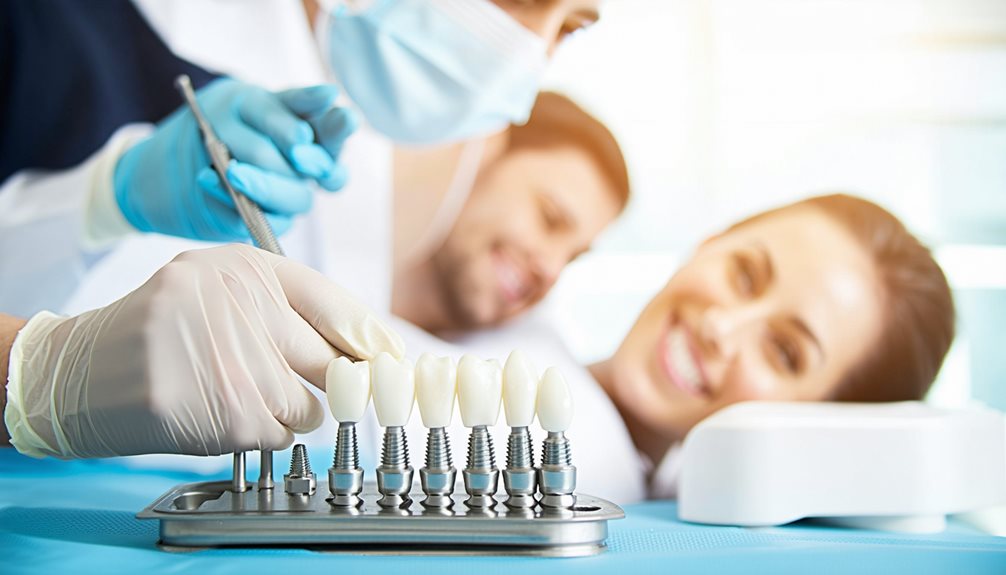
A pain-free dental implant experience relies on several vital factors. Advanced implant technology and skillful surgical techniques guarantee precise and minimally invasive procedures. High-resolution digital imaging and guided surgeries minimize trauma. Quality anesthesia options provide effective numbing and ease anxiety. Extensive pre-surgery consultations assess health risks, while personalized treatment planning tailors the process to individual needs. Post-operative care and individualized pain management foster a comfortable recovery. Continuous patient support and education enhance understanding and confidence. Emphasizing these elements greatly enhances the standard of care and patient satisfaction, offering more insights into the multi-faceted approach to pain management.
Advanced Implant Technology
The advent of advanced implant technology has revolutionized the field of dentistry, offering patients a more comfortable and efficient solution for tooth replacement. At the forefront of this innovation is the integration of digital imaging, which allows for precise planning of implant placement. High-resolution scans provide detailed visualizations of the patient’s oral anatomy, ensuring that each implant is positioned with ideal accuracy.
This cutting-edge approach greatly reduces discomfort and recovery time, enhancing the overall patient experience.
Biomechanical analysis plays a pivotal role in this transformative process, as it evaluates the dynamic interaction between the implant and the surrounding biological structures. By understanding these interactions, clinicians can tailor each implant to withstand individual biomechanical forces, thereby promoting long-term stability and functionality.
This personalized approach minimizes the risk of implant failure and increases patient satisfaction.
Furthermore, the synergy between digital imaging and biomechanical analysis fosters a more predictable outcome, addressing both the aesthetic and functional needs of patients. As a consequence, individuals who once hesitated due to fears of pain or inconvenience now find themselves embracing this advanced technology.
The commitment to innovation and precision in implant dentistry not only alleviates discomfort but also restores confidence and quality of life.
Skillful Surgical Techniques
Mastery in surgical techniques is the cornerstone of successful dental implant procedures. Through the evolution of surgical techniques, practitioners have achieved unprecedented levels of precision, minimizing patient discomfort and enhancing recovery outcomes. A thorough understanding of anatomical structures and the development of minimally invasive methods are essential in guaranteeing pain-free experiences for patients seeking dental implant solutions.
The following elements exemplify the significance of skillful surgical techniques in achieving superior results:
-
Surgical Precision: Meticulous attention to detail in implant placement guarantees the alignment with existing bone structures, reducing trauma and accelerating healing.
-
Technique Evolution: Continuous advancements, such as guided implant surgery, enable clinicians to utilize sophisticated imaging technologies. These innovations facilitate precise pre-surgical planning and execution, thereby enhancing patient comfort.
-
Patient-Centric Approach: Empathetic communication and tailored surgical plans take into account individual patient needs, fostering trust and reducing anxiety throughout the procedure.
The integration of cutting-edge techniques with deep clinical knowledge underscores the transformative potential of contemporary dental implant practices.
By prioritizing surgical precision and embracing technique evolution, practitioners not only mitigate pain but also elevate the standard of care, aligning with the aspirations of patients who seek innovative and efficient solutions.
This commitment to excellence ultimately guarantees a seamless and satisfying dental restoration journey.
Quality Anesthesia Options
Anesthesia’s role is pivotal in ensuring a pain-free dental implant procedure, directly influencing patient comfort and procedural success. The strategic selection of anesthesia methods hinges on both the complexity of the procedure and the patient’s unique physiological responses. Local anesthesia is the cornerstone for ensuring targeted numbing of the implant site, effectively blocking nerve signals and preventing pain perception during the procedure. This technique’s precision allows for a focused approach, minimizing systemic exposure and maximizing patient safety.
For patients with heightened anxiety or those undergoing more extensive implant procedures, sedation options present a valuable adjunct. Intravenous sedation, for instance, offers a controlled and adjustable level of sedation, promoting relaxation while maintaining consciousness and cooperation. Alternatively, oral sedation options provide a less invasive approach, facilitating ease of administration and patient compliance.
In this era of dental innovation, the quest for enhanced patient experiences drives the development of advanced anesthetic techniques. The integration of digital imaging and real-time monitoring systems further refines anesthetic application, optimizing both efficacy and safety.
Comprehensive Pre-Surgery Consultation
A thorough pre-surgery consultation is pivotal in ensuring the success of pain-free dental implants, beginning with a meticulous medical assessment to identify any underlying conditions that may influence treatment outcomes.
Personalized treatment planning, tailored to the unique anatomical and health considerations of each patient, enhances procedural efficacy and minimizes discomfort.
Thorough Medical Assessment
Conducting a thorough medical assessment is a critical step in guaranteeing the success and safety of dental implant procedures. This extensive evaluation aims to uncover any underlying conditions that may influence the outcome of the surgery. A detailed medical history is indispensable in identifying potential risk factors that could compromise implant integration or lead to complications.
Understanding a patient’s previous medical interventions, current medications, and systemic health status enables clinicians to tailor their approach, minimizing adverse outcomes.
The medical assessment encompasses several key components:
-
Medical History Review: This involves an in-depth discussion with the patient to document previous surgeries, allergies, and chronic illnesses.
-
Risk Factor Identification: Certain conditions such as diabetes, osteoporosis, and smoking are scrutinized due to their potential to hinder healing and osseointegration.
-
Diagnostic Imaging: Advanced imaging techniques, such as cone beam computed tomography (CBCT), provide a three-dimensional view of the jawbone, facilitating precise planning.
The empathetic consideration of individual patient variability guarantees a personalized approach to care, fostering a sense of trust and security.
Personalized Treatment Planning
Frequently, the cornerstone of a successful dental implant procedure lies in meticulous personalized treatment planning, initiated during a thorough pre-surgery consultation. This extensive evaluation is vital for tailoring the implant strategy to each individual’s unique anatomical and physiological characteristics.
By integrating advanced imaging technologies, clinicians can obtain high-resolution, three-dimensional representations of the patient’s oral structures. This precise visualization facilitates the identification of ideal implant placement, mitigating potential complications and enhancing procedural efficacy.
During this consultation, patient preferences and treatment goals are meticulously analyzed to guarantee alignment with clinical objectives. Understanding the patient’s aesthetic desires and functional expectations is essential in devising a plan that not only addresses their immediate needs but also anticipates future oral health considerations.
This patient-centric approach empowers individuals, fostering a collaborative environment where they are actively involved in decision-making processes.
The development of a personalized treatment plan is further fortified by leveraging cutting-edge digital planning software. Such innovation enables simulation of various treatment scenarios, offering predictive insights into outcomes.
Patient Health Optimization
In optimizing patient health prior to dental implant surgery, a thorough pre-surgery consultation serves as a fundamental foundation. This vital phase encompasses a multidimensional approach to guarantee ideal patient outcomes and mitigate postoperative discomfort.
During this pre-surgery consultation, the following elements are essential:
-
Nutritional Enhancement: Tailoring dietary recommendations to bolster essential vitamins and minerals necessary for tissue regeneration and osseointegration.
-
Stress Management: Implementing evidence-based strategies to alleviate anxiety, which can profoundly impact the physiological response to surgery.
-
Medical History Review: Detailed assessment of systemic conditions, medications, and previous surgeries to customize the surgical approach.
This patient-centered methodology not only elevates the standard of care but also aligns with innovative practices that prioritize holistic wellbeing.
Personalized Aftercare Plans
In the domain of pain-free dental implants, personalized aftercare plans are pivotal to optimizing patient outcomes.
Tailored recovery instructions guarantee that each patient receives guidance suited to their unique healing process, while individualized pain management strategies are crafted to address specific discomfort levels effectively.
Moreover, customized follow-up visits are scheduled to monitor progress and make necessary adjustments, guaranteeing a seamless and comfortable recovery trajectory.
Tailored Recovery Instructions
Effective recovery from dental implant surgery hinges on personalized aftercare plans that cater to the unique needs of each patient. Such tailored recovery instructions are vital in ensuring ideal healing and comfort.
The recovery timeline must be clearly defined and communicated, providing patients with a structured framework to anticipate milestones and setbacks. By customizing these timelines, dental professionals can adapt to the patient’s biological healing processes and lifestyle requirements.
Nutrition guidelines are another cornerstone of personalized aftercare. A nutrient-rich diet bolsters tissue regeneration and minimizes inflammation, directly impacting the success of the dental implant. Emphasizing specific dietary recommendations, such as soft foods and vitamin-rich meals, can accelerate recovery and mitigate discomfort.
Key components of tailored recovery instructions typically include:
- Customized recovery timeline: Outlining stages from immediate post-operative care to long-term maintenance, considering individual healing rates.
- Personalized nutrition guidelines****: Advising on meals that promote healing, tailored to dietary preferences and restrictions.
- Post-operative care protocols: Specific instructions on oral hygiene practices, activity restrictions, and follow-up appointments.
Individualized Pain Management
With a focus on patient-centric care, individualized pain management in dental implant recovery is pivotal in enhancing patient comfort and optimizing outcomes.
Recognizing the diversity in individual pain thresholds, clinicians must employ a personalized approach when developing aftercare plans. This involves a thorough preoperative assessment to identify each patient’s unique pain sensitivity and anxiety levels, thereby tailoring interventions to address specific needs effectively.
Innovative pain management strategies may include the use of multimodal analgesia, combining pharmacologic and non-pharmacologic methods to minimize discomfort.
Personalized medication regimens, consisting of nonsteroidal anti-inflammatory drugs (NSAIDs), acetaminophen, or local anesthetics, can be calibrated based on the patient’s physiological response to pain.
Additionally, adjunctive techniques such as guided imagery or relaxation exercises are incorporated into tailored anxiety management plans to alleviate procedure-related stress.
Customized Follow-Up Visits
Ensuring a seamless recovery process, customized follow-up visits are an integral component of personalized aftercare plans for dental implant patients. These visits are meticulously tailored to address individual healing patterns and specific needs, fostering ideal outcomes and enhancing patient engagement.
By prioritizing the follow-up importance, dental practitioners can preemptively identify and manage potential complications, thereby ensuring a pain-free experience.
The importance of these visits is underscored by several critical factors:
-
Monitoring Healing Progress: Regular assessments allow practitioners to evaluate tissue integration and detect any anomalies early.
-
Adjusting Care Protocols: Personalized interventions can be adjusted based on the patient’s unique response, ensuring that treatment remains effective and comfortable.
-
Strengthening Patient-Practitioner Communication****: Ongoing dialogue fosters trust and empowers patients through education about their recovery journey.
Incorporating innovative technologies such as digital imaging and telehealth consultations into follow-up protocols can further enhance patient engagement and precision in post-operative care.
These tools facilitate real-time feedback and remote monitoring, allowing for timely interventions without necessitating frequent in-person visits.
Ultimately, the integration of customized follow-up visits into dental implant aftercare not only underscores the importance of attentive, patient-centric care but also aligns with the modern pursuit of advanced, pain-free dental solutions.
Continuous Patient Support
Thorough patient support is a cornerstone of successful dental implant procedures, guaranteeing that individuals receive the necessary guidance and assistance throughout their treatment journey. Continuous patient support encompasses detailed patient education and emotional support, both essential in demystifying the implant process and alleviating patient anxiety.
By employing advanced digital imaging and simulation technologies, clinicians are able to offer patients a clear understanding of the procedure, facilitating informed decision-making and fostering trust.
Patient education extends beyond procedural insights, incorporating postoperative care instructions and strategies for peak oral hygiene. This empowers patients to actively participate in their recovery, enhancing implant success rates.
Furthermore, emotional support is imperative in mitigating preoperative apprehension and postoperative discomfort. Dentists and their teams are trained to engage empathetically, providing reassurance and addressing concerns promptly, which is crucial for patient confidence.
Innovative approaches to continuous support include the use of telehealth platforms, enabling real-time communication between patients and healthcare providers. This technological integration guarantees that patients receive immediate attention to any issues that arise, minimizing complications and enhancing overall satisfaction.
Ultimately, continuous patient support is an indispensable element in achieving a seamless, pain-free dental implant experience.
Frequently Asked Questions
How Long Does the Entire Dental Implant Process Take?
The dental implant process typically spans several months, with timeline expectations influenced by individual healing processes. Initial placement takes a few hours, while osseointegration and final restoration can require three to six months, ensuring ideal functionality and patient satisfaction.
Are Dental Implants Suitable for Everyone?
Determining dental implant candidacy requires evaluating factors such as overall dental health, bone density, and systemic conditions. While not universally suitable, advancements in technology and techniques increasingly broaden eligibility, enhancing personalized care and fostering innovative solutions for patients.
What Are the Potential Risks of Dental Implants?
Dental implant complications can include infection risks, nerve damage, or implant failure. Meticulous surgical technique and advanced infection control protocols are essential to mitigate these risks, ensuring ideal outcomes and enhancing patient satisfaction with innovative dental implant solutions.
How Do I Maintain Dental Implants After Surgery?
Proper implant care post-surgery is essential. Emphasize meticulous oral hygiene through regular brushing, flossing, and antimicrobial rinses. Schedule consistent dental check-ups to monitor the implant’s integration and health, ensuring long-term success and ideal functional performance of the implants.
Can Dental Implants Affect Speech or Eating?
Dental implants generally enhance speech patterns and eating habits by providing stable, natural-feeling support. Initial adaptation may involve minor adjustments, yet most patients experience improved oral functionality, fostering confidence and innovation in daily communication and dietary practices.
Conclusion
The guarantee of pain-free dental implants is contingent upon the integration of advanced implant technology, the execution of skillful surgical techniques, and the application of quality anesthesia options. Thorough pre-surgery consultations facilitate tailored treatment plans, while personalized aftercare guarantees ideal recovery. Continuous patient support further enhances the patient experience, minimizing discomfort and promoting healing. This multifaceted approach underscores the importance of precision, empathy, and innovation in delivering effective and compassionate dental care.

